
Qu’est-ce que la glace de pépite? Un guide complet du soft, Glace à mâcher
Partager:
-

-

-

-


Copié
Partager:
-
-
-
-
Copié
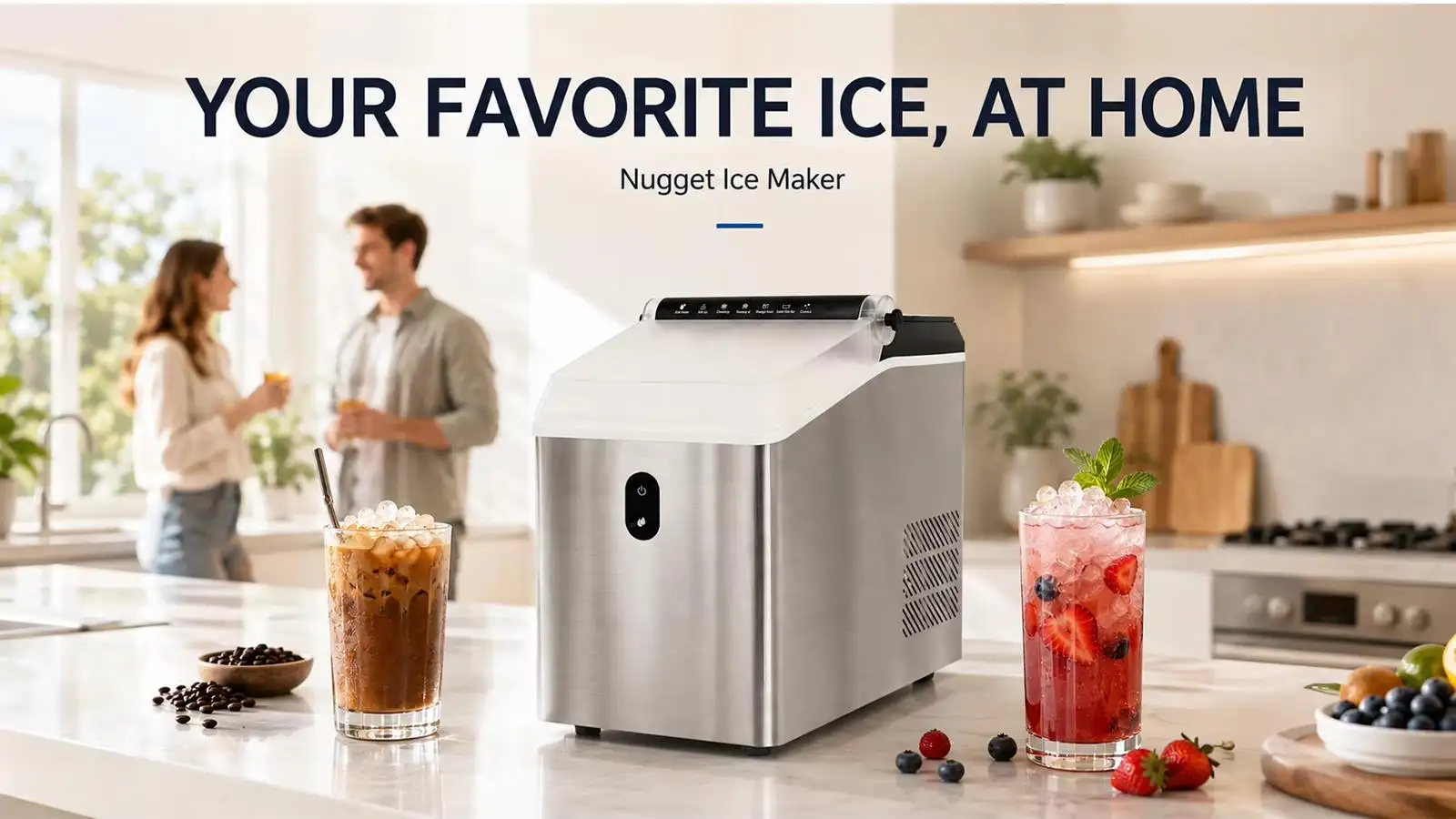
Si vous avez déjà fini une boisson froide et vous êtes retrouvé à manger de la glace au fond du gobelet, there is a good chance it was Glace de pépite.
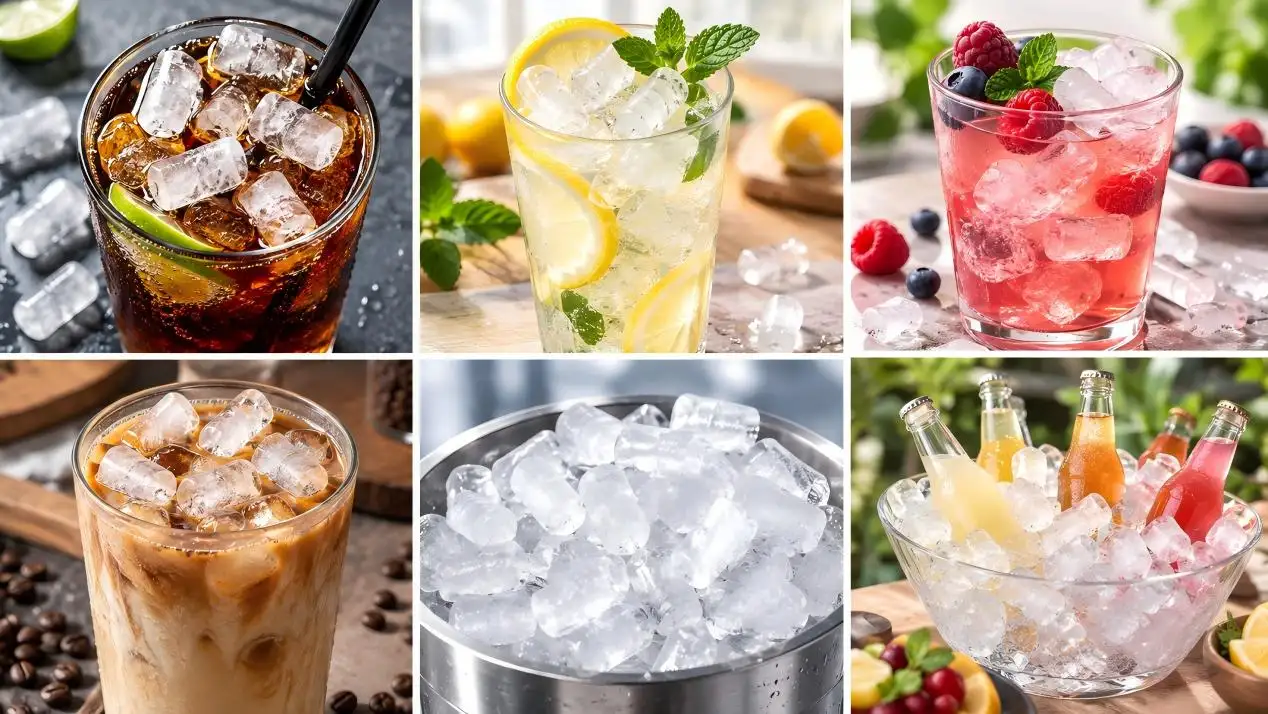
Unlike the hard cubes found in a typical freezer, nugget ice is small, Douce, porous and surprisingly easy to chew. It has become especially popular in soft drinks, Café glacé, cocktails and other cold beverages—not just because it keeps drinks cold, but because the ice itself is part of the experience.
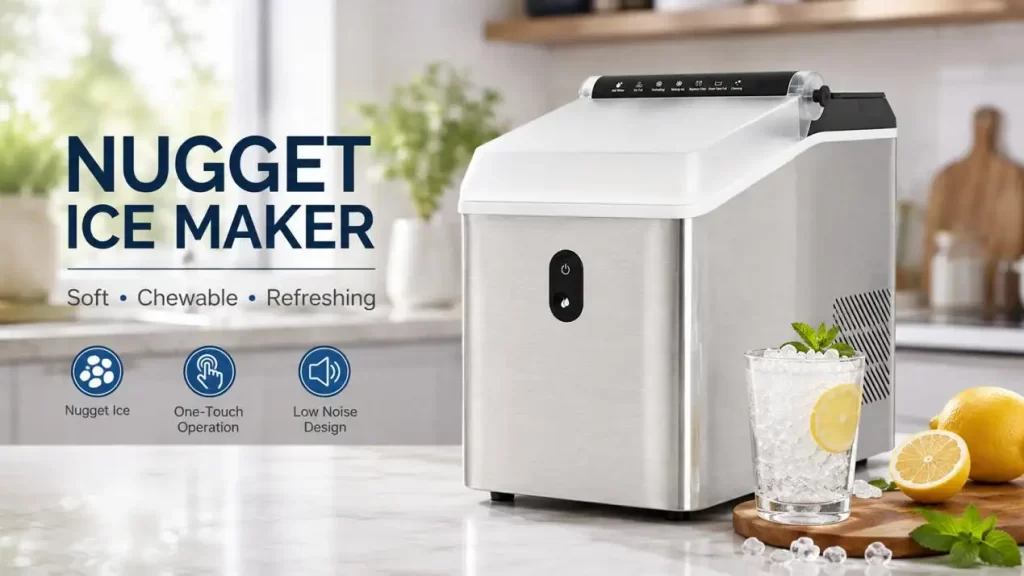
Ainsi, what exactly is nugget ice? Why is it softer than regular ice? And how does a nugget ice maker produce it?
Let’s take a closer look.
Qu’est-ce que la glace de pépite?
Nugget ice is a type of soft, chewable ice made by forming and compressing small pieces of flake-style ice.
You may also see it called Glace à mâcher, pellet ice or pebble ice. “Sonic-style ice” is another expression commonly used in consumer content, although these names are not necessarily technical standards for one exact ice shape or texture.
The easiest way to recognize nugget ice is by its texture.
A conventional cube is relatively solid and dense. Nugget ice has a more open structure, which makes it softer when you bite into it. Its small size also gives it a different feel in a glass and allows it to interact more closely with the beverage.
That is really the reason people like it. Nugget ice isn't simply smaller cube ice. It is made differently.
Why Is Nugget Ice Soft and Chewable?
The answer starts with the way the ice freezes.
Traditional cube ice is usually formed by freezing water in a mold until a solid piece develops. Nugget ice takes a different route.
In a typical nugget ice-making process, a thin layer of ice forms on a refrigerated surface. The ice is then continuously removed as flakes and moved through the machine, where the flakes are compacted into small pieces.
Because the final nugget is made from compressed flakes rather than one solid block of ice, tiny spaces remain within its structure. That helps give nugget ice its characteristic soft and porous texture.
This also explains why nugget ice feels different in your mouth.
It has some crunch, but you don't get the hard, glass-like bite of a conventional cube.
And for many people, that is the whole appeal.
How Is Nugget Ice Made?
The exact design varies from one machine to another, but the basic idea is relatively straightforward.
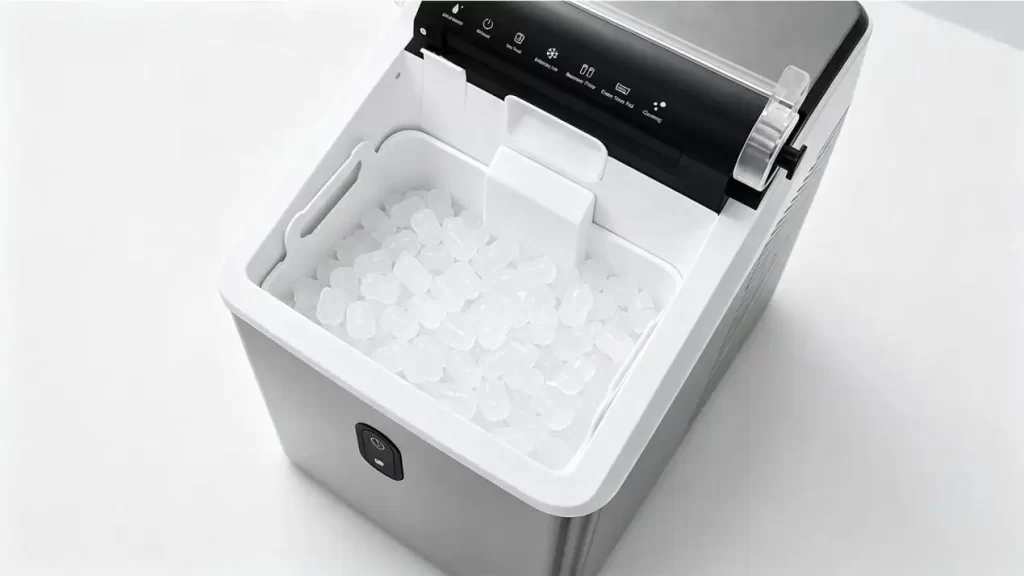
Water enters the ice-making system and reaches a refrigerated cylinder or similar freezing surface. A thin layer of ice gradually forms. Instead of waiting for the water to freeze into one large block, the machine continuously removes the newly formed ice.
An auger or similar mechanical system moves the ice upward. Au cours de ce processus, the ice flakes are compressed and pushed through an outlet, forming the small nuggets that eventually fall into the ice bin.
En termes simples:
Water → Thin Ice Layer → Ice Flakes → Compression → Nugget Ice
The mechanism sounds simple when written this way. Making it work consistently is another matter.
The refrigeration system needs to maintain the right freezing conditions. Water needs to circulate properly. The mechanical parts have to move the ice without creating unnecessary resistance. En même temps, the finished ice needs to have a reasonably consistent texture and production rate.
That is where the engineering of a nugget ice maker becomes important.
What Makes Good Nugget Ice?
Not all nugget ice feels exactly the same.
If you compare ice from different machines, you may notice differences in softness, Taille, humidité, density and how quickly the pieces melt.
For an ice maker manufacturer, these details matter.
Pendant le développement du produit, we look beyond the headline production capacity. A machine that produces a certain amount of ice per day still needs to produce that ice consistently. Refrigeration performance, Circulation de l’eau, internal structure and heat dissipation can all affect how the machine performs over time.
In our own nugget ice maker development work, we have had customers ask for higher production capacity while keeping the machine suitable for household or light-commercial use. One recent project involved developing a nugget ice maker capable of producing up to 20 kg of ice in 24 hours. Reaching the requested capacity was not simply a matter of changing one component. The project involved prototype evaluation and performance optimization across the ice-making system, Circulation de l’eau, internal structure and heat dissipation.
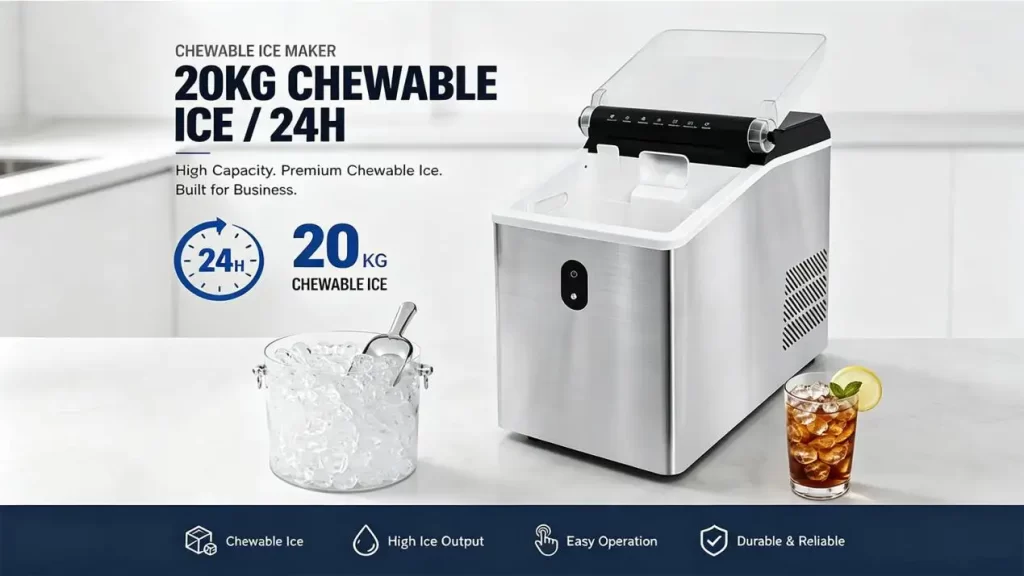
That experience is useful because it shows something that product specifications don't always tell you: ice output, ice texture and machine reliability have to work together.
Nugget Ice vs. Cube Ice
The difference is easiest to see when the two types are side by side.
| Caractéristiques | Nugget Ice | Cube Ice |
| Texture | Moelleux et mâchable | Hard and dense |
| Structure | Porous | Relatively solid |
| Forme | Petit, irregular or pellet-like | Usually uniform |
| Facilité à masquer | Easy to chew | Hard to chew |
| Typical applications | Boissons gazeuses, Café glacé, Cocktails | Eau, Cocktails, general cooling |
| Melting behavior | Generally faster | Generally slower |
Neither type is automatically better for every application.
If slow melting is the priority, traditional cube ice may be more appropriate. If the texture of the ice is part of the beverage experience, nugget ice offers something quite different.
Pour une comparaison plus approfondie, voir notre [Nugget Ice vs. Cube Ice Guide].
Nugget Ice vs. Crushed Ice
Nugget ice is sometimes confused with crushed ice because both are relatively small.
The production method is different, cependant.
Crushed ice is normally made by breaking larger pieces of ice into smaller fragments. The pieces can have sharp edges and vary considerably in size.
Nugget ice is produced with its final texture in mind. Flake-style ice is compacted into small pieces, creating a softer and more porous structure.
That difference becomes noticeable when you chew it or use it in a drink.
Crushed ice can be useful for cocktails, blended drinks and quick chilling. Nugget ice is particularly popular when people want an ice texture that is soft enough to chew.
Why Do People Like Nugget Ice?
There is a practical reason for its popularity, but there is also a simple one: it is enjoyable to eat.
Nugget ice works well with soft drinks, sparkling water, Café glacé, lemonade and cocktails. Its porous structure can also interact with the surrounding beverage, which is one reason people often describe it as absorbing some of the drink's flavor.
For beverage brands and foodservice businesses, this creates another interesting possibility. Ice doesn't have to be an invisible part of the product. Its texture can become part of the overall drinking experience.
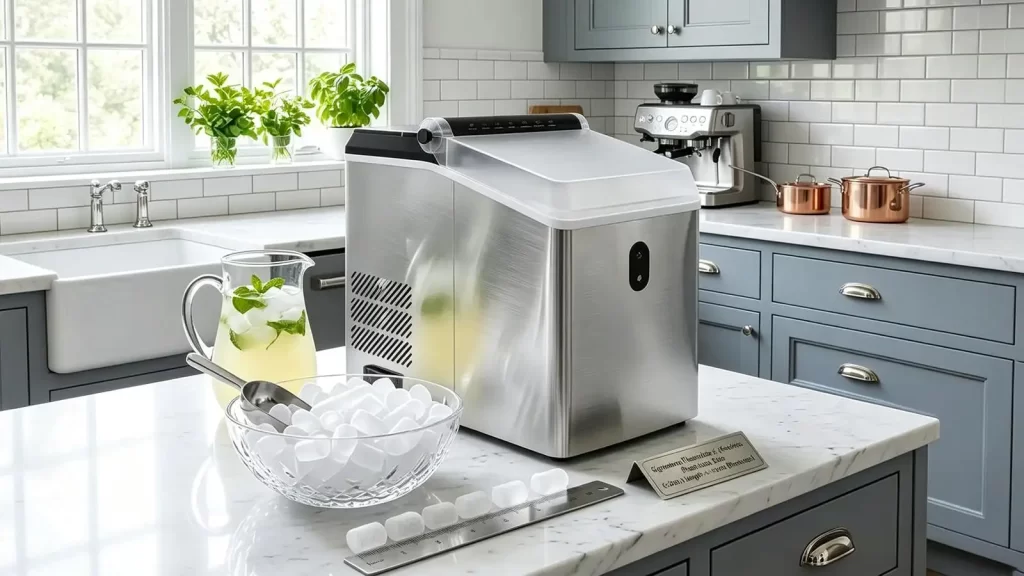
What Should You Look for in a Nugget Ice Maker?
If you are buying a nugget ice maker, daily production is only one number worth checking.
Depending on your application, you may also want to look at:
*Ice texture and consistency
*Daily ice production
*Ice storage capacity
*Water tank capacity
*Noise level
*Cleaning function
*Machine size
*Energy consumption
*Operating controls
*Long-term performance
Pour les distributeurs, importers and private-label brands, the list gets a little longer. Tension, Certifications, Emballage, Apparence du produit, functions and customization options may all need to be discussed before placing a production order.
Notre [Nugget Ice Maker Buying Guide] covers these points in more detail.
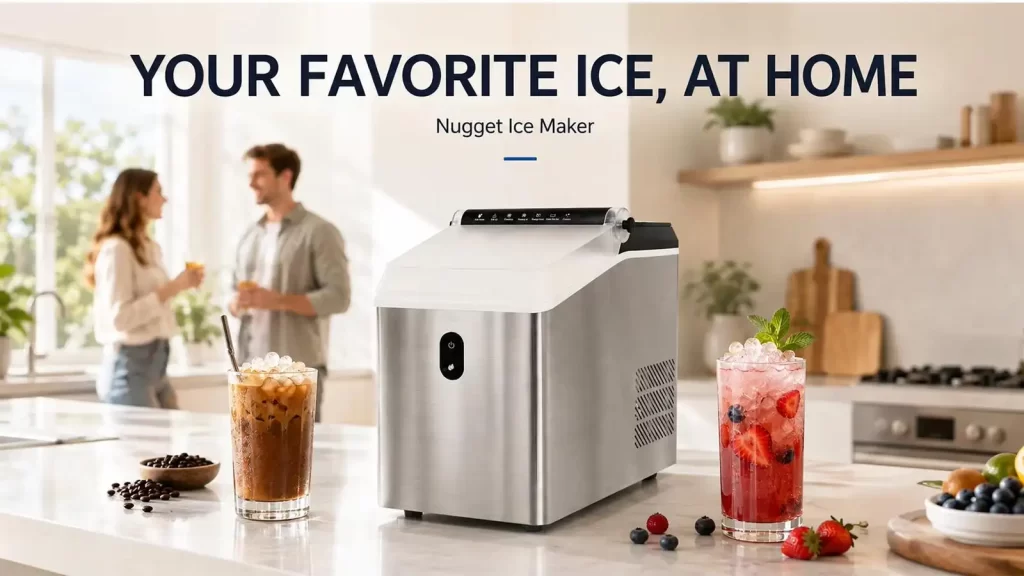
Perspective de l’industrie YUMYTH: Why Ice Output Isn't the Whole Story
À YUMYTH, we manufacture countertop nugget ice makers for household and light-commercial applications and support OEM/ODM projects for international brands.
One thing we have learned from product development is that customers often start with a very simple requirement:
“We need more ice.”
But once engineering work begins, the question becomes more complicated.
How much ice needs to be produced? How quickly? What kind of texture should it have? How large should the machine be? Can the refrigeration system maintain stable performance? How should the internal structure be arranged? And can the product still be manufactured efficiently at scale?
Our recent 20 kg/24h nugget ice maker project is a good example. The customer wanted higher production capacity from a household-oriented product. We worked through prototype evaluation and performance optimization before moving toward a market-ready solution.
For us, OEM/ODM is therefore not limited to putting a customer's logo on an existing machine.
Selon le projet, our development support can include product appearance and structural design, function development, ice production capacity optimization, control panel customization, material and color selection, prototyping and production preparation.
We also recently documented our production testing process, including refrigeration verification, leak detection and electrical safety testing before products move to packaging. For OEM and ODM customers, these checks help create more consistent production and clearer Contrôle qualité.
If your company is looking for a custom nugget ice maker, private-label product or OEM/ODM manufacturing partner, you can learn more about our [Custom Nugget Ice Maker OEM & ODM Solutions].
Questions fréquemment posées
Is nugget ice the same as pellet ice?
The terms are often used interchangeably. Nugget ice is also commonly described as pellet, pebble or chewable ice. Toutefois, these names can vary between manufacturers and markets, so the actual ice texture and dimensions should be confirmed from the product specifications.
Why is nugget ice so soft?
Nugget ice is made by compacting thin pieces of flake-style ice rather than freezing one solid block. This creates a more porous structure, which makes the finished ice softer and easier to chew.
La glace de pépite fond-elle plus vite que la glace en cubes?
En général, Oui. Nugget ice has a smaller, more porous structure and a relatively large surface area. Dense cube ice generally lasts longer under the same conditions.
La glace aux nuggets est-elle bonne pour le café glacé ??
Oui. Nugget ice is commonly used with iced coffee, Boissons gazeuses, cocktails and other cold beverages. Its soft texture also makes it enjoyable to chew after the drink is finished.
Can nugget ice be customized for a private-label brand?
Oui. Depending on the manufacturer and project requirements, customization may include appearance, Couleur, Panneau de contrôle, Fonctions, Capacité, packaging and branding. YUMYTH also supports product development and prototype-based OEM/ODM projects.
Dernières réflexions
Nugget ice is popular for a fairly simple reason: it feels different.
It is softer than conventional cube ice, easy to chew and well suited to a wide range of cold drinks. But behind that simple experience is a more involved ice-making process involving refrigeration, Circulation de l’eau, mechanical movement and compression.
Pour les consommateurs, that explains why nugget ice has become a favorite.
For appliance brands and distributors, it raises a different question: how do you make that texture consistently while also achieving the right production capacity, Taille de la machine, reliability and cost?
That is where product engineering—and the experience of the manufacturer behind the machine—really starts to matter.
Articles connexes
Qu’est-ce que la glace de pépite? Un guide complet du soft, Glace à mâcher
2026-09-17
PAR YUMYTH
Si vous avez déjà fini une boisson froide et vous êtes retrouvé à manger de la glace au fond du gobelet, Il y a de fortes chances que ce soit de la glace de pépite. Contrairement à....
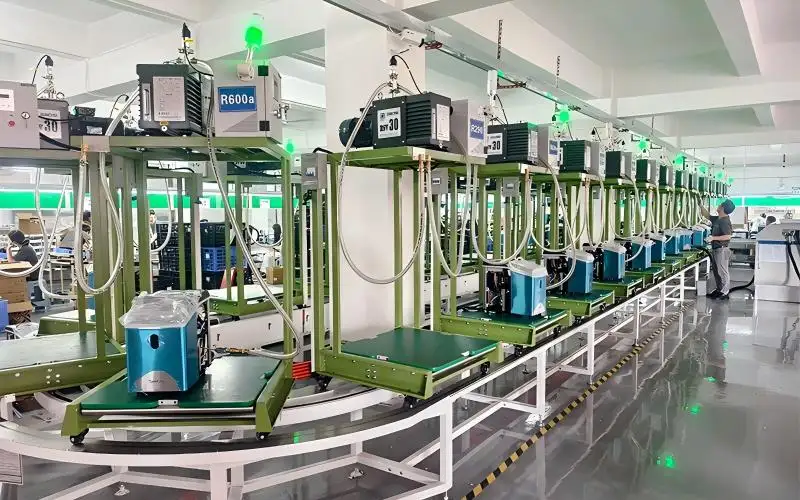
Comment tester chaque machine à glace avant l’emballage
2026-09-15
PAR YUMYTH
Un aperçu étape par étape de la gestion des réfrigérants, Vérification du refroidissement, Détection des fuites, Action corrective et tests de sécurité électrique pour une machine à glaçons, La fiabilité des performances est déterminée bien avant que le carton ne soit scellé. ...
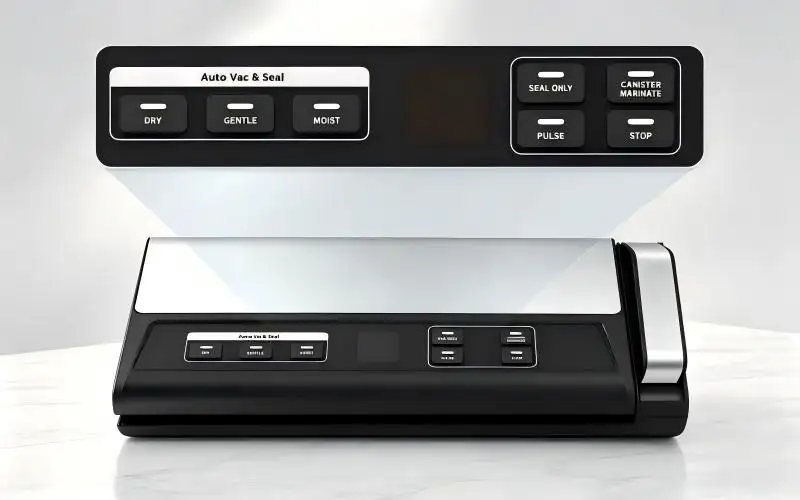
Guide pour les marques à la recherche d’un fournisseur OEM fiable de scelleuses sous vide
2026-09-14
PAR YUMYTH
Lorsque vous achetez des appareils de cuisine pour votre marque de détail, Trouver un fournisseur fiable de scelleuses sous vide ne se limite que rarement à obtenir le prix unitaire le plus bas. Il s’agit de protéger....
Pourquoi la forme de la glace est importante: Comprendre la glace de pépite cylindrique de 10 mm × 15 mm
2026-09-14
PAR YUMYTH
Plus que la production de glace — la glace elle-même façonne l’expérience du consommateur lors de l’achat d’une machine à glaçons à pépites, Les acheteurs se concentrent souvent d’abord sur la capacité de production, Taille du réservoir d’eau, panier à glace....