
Vacuum Sealer Factory OEM Guide: Custom Functions, Commandes, Colors and Packaging
Partager:
-

-

-

-


Copié
Partager:
-
-
-
-
Copié
OEM vacuum sealer development is rarely just a matter of changing a logo or housing color. A capable Vacuum Sealer Factory must coordinate vacuum performance, Configuration de la pompe, Contrôle de l’étanchéité, user interface, Compatibilité des sacs, housing structure, electrical versions and packaging before a design is released for production.
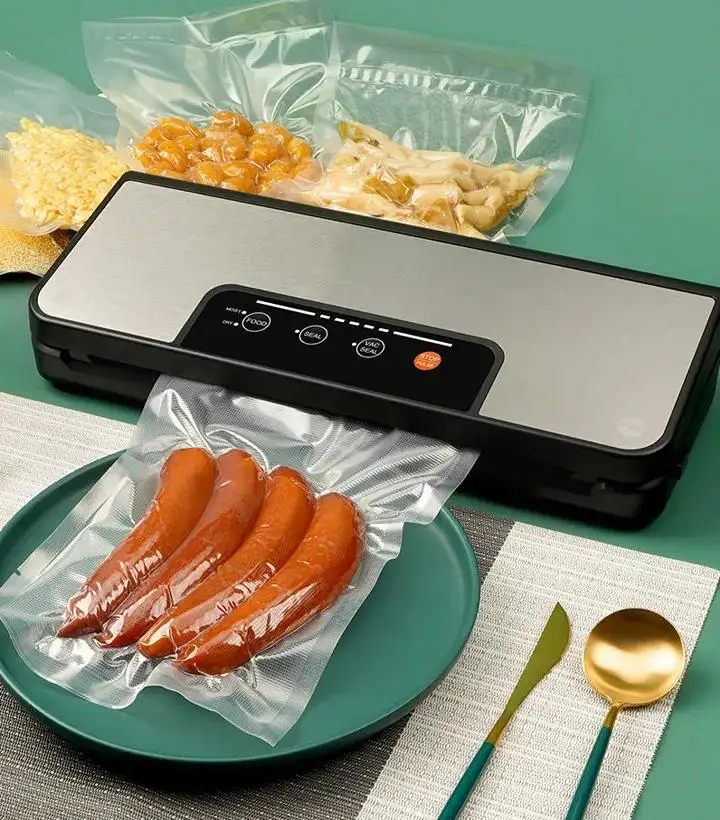
À YUMYTH, OEM development is based on existing vacuum sealer platforms with different control systems and structural configurations. This allows buyers to determine whether a project requires simple branding changes, program tuning, hardware modification or deeper structural development.
Define the OEM Specification Before Product Modification
One of the most common sourcing problems is defining requirements separately. A buyer may request a new control panel, then increase bag width, add roll storage and finally change accessories. Each decision can affect internal space, electronics or packaging.
A Vacuum Sealer Factory should therefore freeze several specifications before sampling:
•Vacuum and sealing modes
•Target vacuum level and cycle behavior
•Maximum bag width
•Pulse, accessory VAC or Inflate requirements
•Mechanical, touch or LCD controls
•Housing material and color
•Cleaning and removable components
•Voltage and plug configuration
•Accessories and final packaging
The key distinction is between cosmetic customization and engineering customization.
| OEM Level | Typical Changes | Engineering Impact |
| Image de marque | Logo, Couleur, carton | Low |
| Interface | Buttons, graphics, Indicateurs | Low–Medium |
| Fonctionnel | Vacuum logic, Pulse, sealing programs | Moyen |
| Hardware | Ports, Chemin de l’écoulement d’air, Composants électroniques | Medium–High |
| Structure | Housing, Stockage des rouleaux, Disposition des étanchéités | Haut |
Vacuum Pressure and Pump Flow Are Different Design Parameters
A technically experienced Vacuum Sealer Factory should not evaluate performance using vacuum pressure alone.
Vacuum pressure indicates the achievable negative pressure, while pump flow determines how quickly air is removed. Actual cycle performance also depends on bag volume, Fuite, État du joint, air-path resistance and program duration.
YUMYTH's CVS101 platform provides a useful comparison:
| Vacuum System | Pression sous vide | Débit de la pompe |
| Mode chambre | -98 kPa | 40 L/min |
| Mode externe | -80 kPa | 8 L/min |
This illustrates why higher flow is not the same as deeper vacuum. OEM program tuning must balance:
Pump capacity → Air removal rate → Vacuum threshold → Cycle time → Seal initiation
Extending vacuum time without considering the food structure can also create excessive compression. For delicate items, controlled Pulse operation may be more appropriate than simply increasing vacuum duration.
Automatique, Pulse, Accessory VAC and Inflate Require Different Systems
Function names on the control panel do not describe the full engineering requirement.
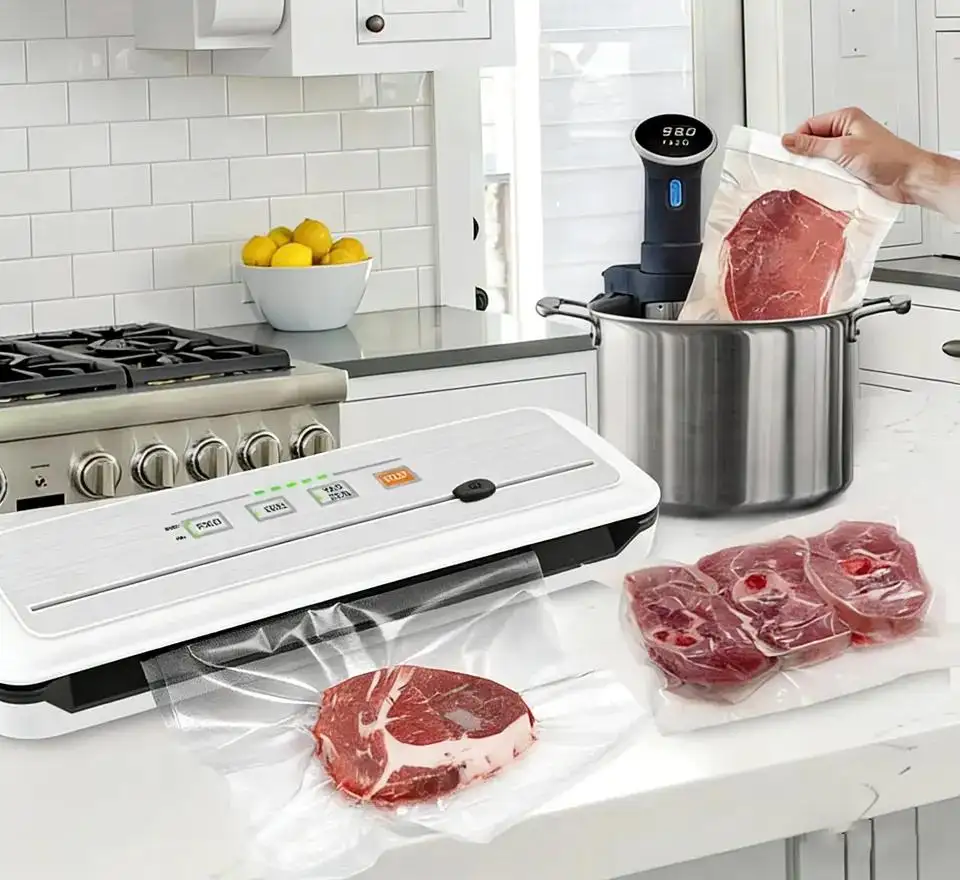
YUMYTH's VS6612X and VS6606X include Pulse control, allowing users to manually regulate vacuuming and stop before soft products are crushed. Their VAC function supports compatible external accessories such as containers, bottles and vacuum bags.
The VS8001G adds an Inflate function, which uses a different airflow strategy to introduce air into the package for fragile-food protection.
| Fonction | Operating Logic | Main Technical Requirement |
| Automatic Vacuum | Program-controlled cycle | Pump + firmware logic |
| Pulse Vacuum | User manually controls vacuum duration | Responsive control input |
| Accessory VAC | Air removed through external port | Port, tubing and airflow path |
| Gonflez | Air introduced into package | Dedicated airflow/control arrangement |
Pour les projets OEM, YUMYTH first evaluates whether the selected platform can physically support the requested function. Software alone cannot compensate for missing ports, valves or airflow hardware.
Control Panel Selection Affects PCB and Firmware Design
Boutons mécaniques, touch panels and LCD interfaces represent different engineering paths rather than simple styling choices.
Mechanical Buttons + LED
Used on platforms such as VS6612X and VS6606X, this configuration provides direct function mapping with comparatively simple user interaction.
Touch Controls
Touch interfaces allow more flexible panel graphics and cleaner exterior surfaces but require proper coordination between the control board, sensing area and firmware.
LCD + Touch
The VS6680M combines LCD display and touch controls, allowing additional operating information to be displayed. This increases UI capability but also raises firmware and PCB integration requirements.
A change from mechanical controls to LCD is therefore not simply:
New panel artwork → production.
It may become:
New interface → PCB evaluation → firmware mapping → housing opening → functional validation.
Largeur du sac, Sealing Bar and Housing Must Be Matched
Another common OEM mistake is treating bag size as an independent specification.
For YUMYTH platforms with roll storage, such as the VS6685H and VS8001G, the storage system supports rolls up to 28 cm × 600 cm. Supporting the roll requires sufficient internal volume as well as compatible sealing geometry.
The design relationship is:
Bag Width → Sealing Bar Length → Heating Area → Internal Space → Housing Width
Adding a built-in cutter, as found on the VS6612X and VS6606X, introduces another mechanical assembly that must be positioned without interfering with the sealing chamber or roll path.
Pour cette raison, a Vacuum Sealer Factory should verify bag dimensions before confirming housing customization.
Seal Quality Depends on More Than Heating Time
Reliable sealing requires several variables to work together:
•Bag film structure and thickness
•Heating element output
•Sealing duration
•Compression pressure
•Surface cleanliness
• Condition du joint
•Cooling time before the seal is stressed
Changing bag material while keeping the original sealing program unchanged can result in weak seals, wrinkling or overheating.
YUMYTH can tune vacuum strength, sealing modes and sealing time for OEM projects, but these settings should be verified using the intended packaging material rather than selected only from software values.
Housing Color and Panel Changes Have Different Tooling Impacts
A Vacuum Sealer Factory should separate material/color customization from geometry changes.
Existing ABS housings can often use different color formulations without changing the mold geometry. Cependant, changing:
display window dimensions;
•Button openings;
•Housing dimensions;
•Roll-storage structure;
•Control-panel geometry;
may require tooling modification or a new molded component.
YUMYTH operates in-house plastic-component manufacturing supported by 30+ injection molding machines, allowing housing design, molded components and downstream assembly requirements to be evaluated within the same production system.
Platforms combining ABS with stainless-steel panels or SUS430 also provide different branding and surface-design options.
Cleaning Design Must Be Included in OEM Evaluation
Moist-food use places additional demands on the sealing area. Liquid or food residue entering the vacuum channel can affect hygiene and vacuum stability.
YUMYTH platforms including the VS6680M, VS6685H and CVS101 use removable drip trays for easier cleaning. Selected platforms also use durable silicone sealing gaskets.
During sample approval, buyers should inspect:
•Drip-tray removal and reinstallation
•Gasket fit and compression
Vacuum-channel accessibility
•Sealing-area cleaning
•Power-cord and accessory-port arrangement
These details affect long-term usability even though they are often overlooked during appearance-focused OEM development.
Derniers mots
A professional Vacuum Sealer Factory approval should cover vacuum performance, sealing integrity, Logique de contrôle, Compatibilité des sacs, Logement, Accessoires, Version en tension, branding and packaging.
YUMYTH combines small-kitchen-appliance R&D experience with in-house injection molding, assembly and quality-control resources. Pour les acheteurs OEM, the most effective starting point is a complete specification covering functions, Commandes, Structure, appearance and packaging. YUMYTH can then evaluate which existing vacuum sealer platform provides the most practical engineering base and where additional customization is technically justified.
FAQ
Q1. What does YUMYTH offer for an OEM vacuum sealer project?
YUMYTH can accommodate customization for vacuum and sealing programs, control panel interface, colored housings, Image de marque, Taille du sac, Accessoires, Options de tension,et emballage. The type of vacuum sealer and the extent of customization required will determine the level of customization options available.
Q2. Can the vacuum strength and sealing time be customized?
Oui. YUMYTH will evaluate customization requests for vacuum strength and sealing time for OEM projects. The vacuum strength and sealing time cannot be considered independently. The selected bag material and the food to be sealed will affect the type of vacuum pump and sealing mode used.
Q3. Does YUMYTH have a Pulse vacuum mode for vacuum sealing fragile food?
Oui, YUMYTH has models that have Pulse vacuum control(VS6612X, VS6606X). The vacuum sealing process can be stopped before fragile food is compressed too much. This vacuum mode can be useful when an OEM product is capable of sealing both firm and fragile food.
Q4. Does YUMYTH have controls with different mechanical, touch and LCD options?
Oui, different control architectures are used for different platforms. The VS6612X and VS6606X have mechanical controls with LED indicators. The VS6680M has a touch panel with LCD. Customization to these controls may require PCB, Micrologiciel, and housing modifications.
Q5. What is the vacuum performance of the YUMYTH CVS101?
The CVS101 uses a three-pump system. In this system, the chamber mode is set to -98kPa and 40L/min airflow. En revanche,, the mode of external vacuum is set at -80kPa and 8L/min airflow. These values prove that one should evaluate the vacuum pressure and pump flow independently.
Articles connexes
Comment tester chaque machine à glace avant l’emballage
2026-09-15
PAR YUMYTH
Un aperçu étape par étape de la gestion des réfrigérants, Vérification du refroidissement, Détection des fuites, Action corrective et tests de sécurité électrique pour une machine à glaçons, La fiabilité des performances est déterminée bien avant que le carton ne soit scellé. ...
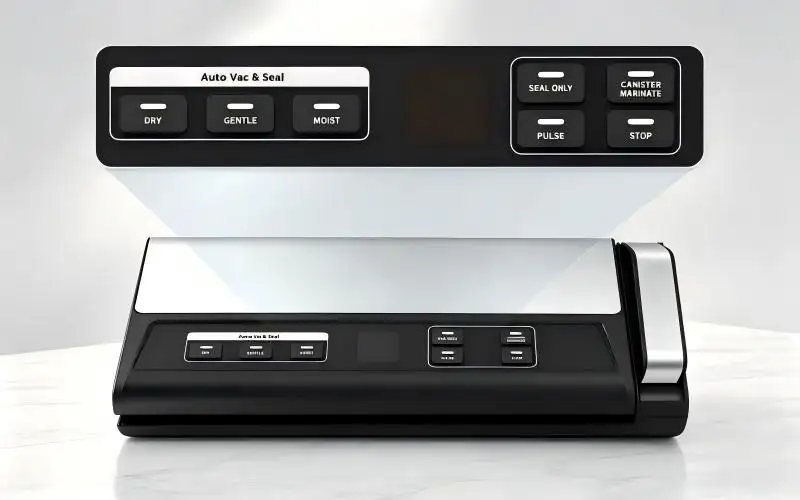
Guide pour les marques à la recherche d’un fournisseur OEM fiable de scelleuses sous vide
2026-09-14
PAR YUMYTH
Lorsque vous achetez des appareils de cuisine pour votre marque de détail, Trouver un fournisseur fiable de scelleuses sous vide ne se limite que rarement à obtenir le prix unitaire le plus bas. Il s’agit de protéger....

Pourquoi la forme de la glace est importante: Comprendre la glace de pépite cylindrique de 10 mm × 15 mm
2026-09-14
PAR YUMYTH
Plus que la production de glace — la glace elle-même façonne l’expérience du consommateur lors de l’achat d’une machine à glaçons à pépites, Les acheteurs se concentrent souvent d’abord sur la capacité de production, Taille du réservoir d’eau, panier à glace....
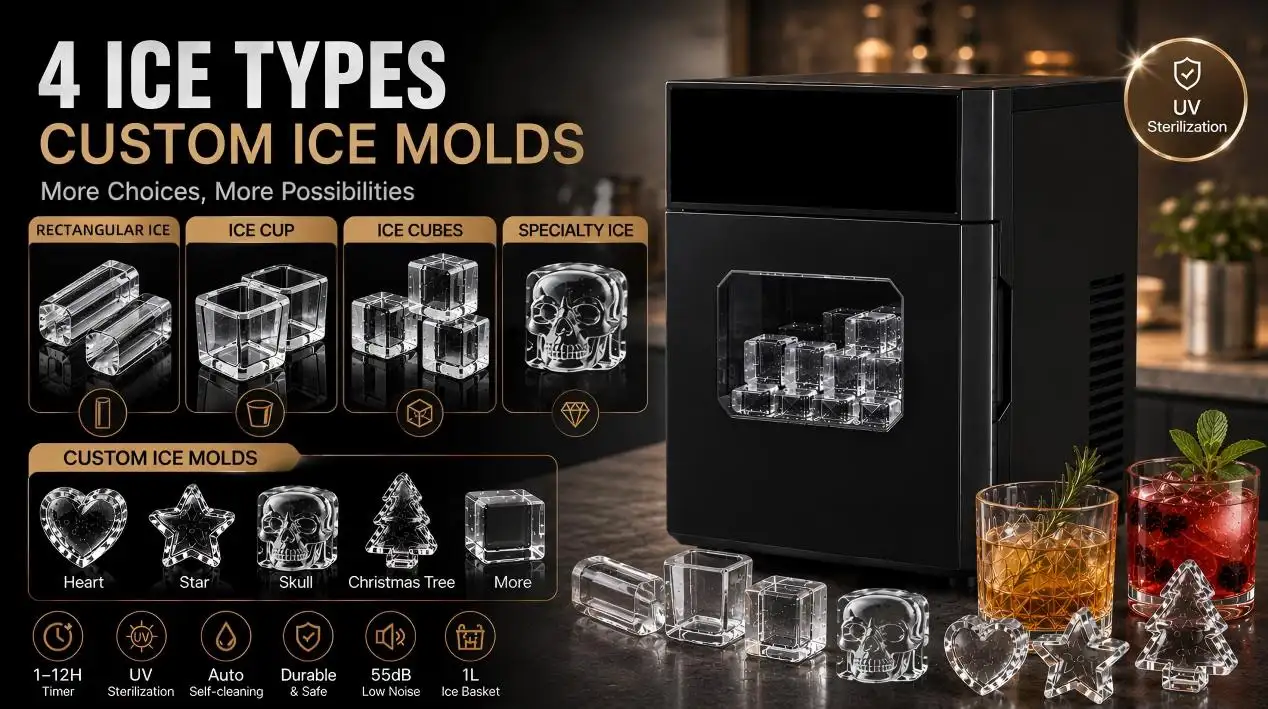
Guide d’approvisionnement en machine à glace: Comment trouver la bonne usine
2026-09-10
PAR YUMYTH
Trouver une machine à glace semble simple sur le papier. Trouvez un fournisseur, D’accord sur un prix, Passer une commande. Mais quiconque a réellement fait cela sait que le processus est rarement....