
Why Your Slushie Machine Won't Freeze - and 11 More Questions Answered
Partager:
-

-

-

-


Copié
Partager:
-
-
-
-
Copié
A practical guide to recipes, Texture, Distribution, cleaning and everyday troubleshooting
Most slush failures begin before anyone presses Start/Stop. A drink can taste perfectly balanced in a glass and still behave badly inside a freezing cylinder. Sucre, alcool, Température de départ, batch size and airflow all influence whether the auger builds fine crystals or fights a solid ring of ice.
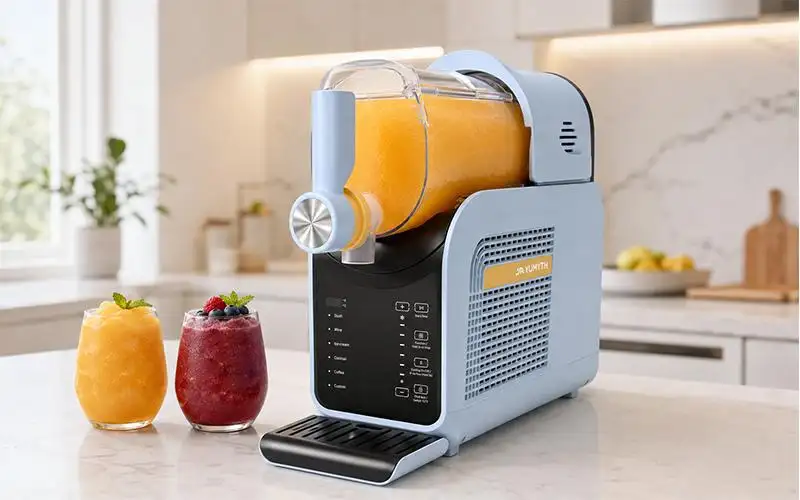
That is why the question "Why is my slushie machine not freezing?" rarely has a one-button answer. The useful approach is to read the liquid first, then the machine. This guide follows that order and uses the YX1802 home slushie machine as a working example.
A quick look at the YX1802
| Item | YX1802 reference |
| Capacité | 1.8 L; keep every batch between the MIN and MAX lines |
| Puissance nominale | 200 W |
| Programmes | Slush, Vin, Glace, Cocktail, Coffee and Custom |
| Contrôle de texture | Adjustable cooling level; factory default is level 3 |
| Cleaning support | 3-minute self-cleaning/rinse cycle plus removable hand-washable parts |
| Dimensions | 452 x 175 x 398 mm (L x W x H) |
| Reference freeze test | Cola at 20-25°C, in a 20-25°C room, reaches slush in under 30 minutes at the middle setting |
1. Comment fonctionne une machine à granitées - and does it need ice?
A compressor-driven slushie machine freezes the drink directly against a refrigerated stainless-steel surface while an auger keeps the liquid moving. That movement limits large ice crystals and creates a texture that can still travel toward the tap. In the YX1802 sequence, the auger can reverse early in the cycle to cool the batch evenly, then rotate forward as the drink forms so the finished slush moves toward the outlet.
You do not need to add ice. En fait, the vessel should be treated as a freezing chamber, not a blender jar. Pour in a prepared liquid recipe, and strain natural fruit juice so seeds, fibers or fruit pieces do not block the dispensing path. Hard pieces and utensils do not belong in the ingredient or dispensing openings.
2. Why is my slush machine running but not freezing?
Start with the five checks below. They are faster - and usually more useful - than repeatedly selecting a colder setting.
Check the recipe. For the YX1802, sugary drinks should contain more than 6% sugar. Finished alcoholic drinks should fall between 2% and 16% alcohol by volume. A mix outside its workable window may stay liquid or freeze too hard.
Check the starting temperature. Refrigerator-cold ingredients reduce the heat the machine must remove. Pre-chilling improves efficiency without changing the recipe.
Check the fill level. Stay between MIN and MAX. Too little product can behave unevenly; overfilling adds thermal load and leaves less room for circulation.
Check airflow. Leave space around the sides and rear. A hot room, blocked vent or dusty cooling path makes it harder for the condenser to reject heat.
Check the operating state. Avoid frequent Start/Stop or Cooling On/Off changes. Compressor protection may delay a restart for roughly 3-5 minutes.If a balanced, chilled batch still shows no cooling, check the display. E1 points to a temperature-sensor error; E2 is a cooling error. An E2 check begins with the compressor, fan and unobstructed air outlet. Persistent electrical or refrigeration faults require authorized service, not opening the motor base at home.
3. Can I make a sugar-free or diet slush?
Not by simply replacing a regular drink with its zero-sugar version. Sugar is not only a sweetener here; it changes the freezing point and helps keep the drink scoopable and pourable. The YX1802 operating guidance calls for more than 6% sugar in sugary beverages. A diet soda with almost no sugar can form hard ice around the evaporator or fail to reach the intended texture.
Use only a low-sugar formula that has been developed for a frozen-drink machine and is compatible with the machine supplier's instructions. Do not improvise with large amounts of glycerol or another freezing-point modifier based on a social-media recipe.
4. How much alcohol can go into a frozen cocktail?
For the YX1802, the recommended finished alcohol range is 2%-16% ABV. "Finished" Affaires: calculate the strength after spirits, jus, syrup and water have been combined, not from the percentage printed on the bottle of liquor.
L’alcool abaisse le point de congélation. As ABV rises, the drink generally takes longer to thicken and may remain soft even at a higher cooling level. Do not try to correct an over-strength cocktail only by making the machine colder. Rebalance the complete batch, chill it and test one controlled recipe at a time.
5. How long should a slushie machine take?
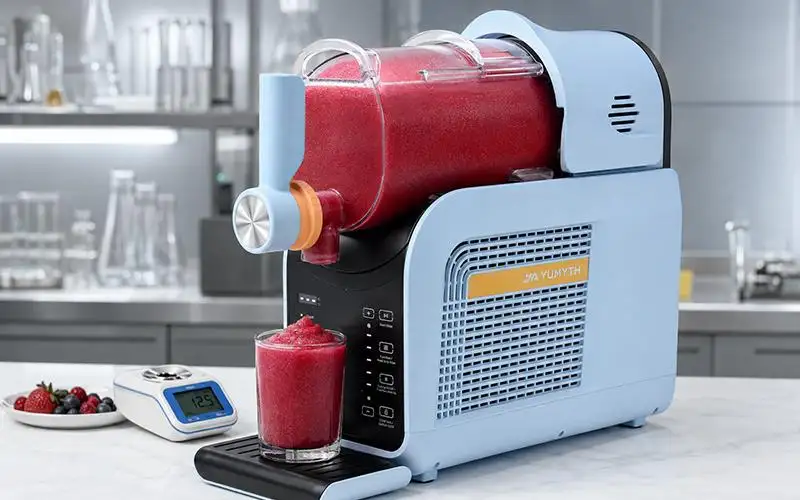
There is no honest universal answer. Current frozen-drink machines advertise very different cycle times because their capacities, Compresseurs, recipes and test conditions differ. The YX1802 product specification gives a useful benchmark: with cola and room temperature both at 20-25°C, the middle cooling level should produce slush in less than 30 minutes.
Real time changes with ambient temperature, ingredient temperature, sucre, alcool, batch volume and the selected texture. Pre-chilled liquid is the simplest way to reduce waiting without disturbing the formula. Keep the sliding cover closed while the machine runs, and judge progress by texture rather than comparing it with an unrelated machine online.
6. Why is the slush too thin - or too hard?
The YX1802 uses cooling levels as texture controls. A higher level removes more free water, creates a firmer drink and normally needs more time. A lower level leaves more water in the mix, so the result is softer and finishes sooner.
If the drink is too loose, raise the cooling level one step and give the batch time to respond. If it is dry, chunky or difficult to dispense, lower the cooling level. When the machine detects a batch that is too hard, it may pause in self-protection and recheck the texture after 3-5 minutes. That pause is useful information: the recipe or setting needs attention.
7. Why will the finished slush not come out of the tap?
First unlock the control panel. If dispensing is difficult during cooling, press and hold Cooling On/Off to switch the auger to clockwise rotation; this moves product toward the outlet. Do not pull harder on the handle or insert an object into the spout.
A batch that is too hard can also bridge at the outlet, while pulp or seeds can obstruct the flow path. Lower the cooling level if the texture is over-frozen. For natural juice, filter solids before the batch enters the vessel. If flow does not return, stop and unplug the machine before disassembly and cleaning.
8. What causes an unusual auger noise?
A scraping or laboring sound often means the auger is fighting a mixture that has frozen too hard. Low sugar, an overly cold setting or insufficient liquid can leave ice on the round evaporator. Pause cooling or lower the cooling level, then allow the mixture to soften.
Assembly is the other common cause. The auger must sit correctly before the vessel is locked down. If it is installed incorrectly, deformed or damaged, switch off and unplug the unit, inspect it and replace the part if necessary. Repeatedly forcing a stalled drive defeats the purpose of the motor-protection system.
9. Is water on the outside a leak?
Pas toujours. Condensation can form on the outside of the transparent vessel in humid weather or during a long run. That is normal. The condensation catch and drip tray are there to manage ordinary moisture and small drips from serving.
Liquid emerging from a vessel joint, tap seal or the machine base is different. Stop the machine and check that the vessel, Joint en silicone, dispensing components and bail lock are assembled correctly. OP on the display specifically indicates poor contact at the vessel microswitch or an improperly installed vessel. Reseat the auger and vessel, then press the bail lock fully into position.
10. How often should I clean a slushie machine?
Clean the YX1802 promptly after every use and whenever you change beverages. This matters even more after dairy, café, fruit or high-sugar recipes, which can leave film in the vessel, auger and tap. A quick rinse is helpful, but it is not the same as a full clean.
For the built-in rinse, unlock the machine and hold Function for three seconds. Add enough clean water to cover the filter above the ingredient opening, keep the water at or below 50°C/122°F, and let the default three-minute cycle finish. Drain the vessel completely. Repeat if needed.
For thorough cleaning, empty and unplug the machine, then remove the vessel, Tarière, condensation catch, silicone sealing ring, drip tray and dispensing-handle components. Hand-wash removable parts in warm 40-50°C water with a suitable dish-cleaning agent and a soft brush. Rinse away all detergent and dry the parts before reassembly. Never immerse the motor base or pour water into the air vents.11. What do E1, E2, E3 and OP mean?
| Code | Meaning | First check |
| E1 | Temperature-sensor error | Power off, unplug and restart. If it returns, arrange service. |
| E2 | Cooling error | Check whether the compressor and fan start and whether the air outlet is blocked. Seek service if unresolved. |
| E3 | Abnormal auger rotation | Power off, unplug and restart. If it returns, arrange service. |
| OP | Vessel contact/assembly problem | Confirm the auger and vessel are seated correctly and press the bail lock down fully. |
12. What should a brand buyer check beyond the feature list?
Presets and touchscreen graphics are easy to compare. The harder questions are about repeatability and after-sales reality. A buyer evaluating a home frozen drink maker should ask how the product behaves with borderline recipes, how quickly food-contact parts can be removed, what protects the motor and compressor, and whether the supplier can document validation rather than only provide a sample video.
- Recipe window: Are sugar and alcohol limits clear enough for recipes, packaging and customer support?
- Disponibilité opérationnelle: Can the vessel, Tarière, Sceaux, tap and drip components be removed without specialist tools?
- Protection logic: Does the unit manage auger stalls, over-hard batches and compressor restart delay?
- Verification: Are cooling performance, Bruit, Puissance, endurance and packaging-drop tests documented?
- Compliance path: Are food-contact materials and electrical requirements mapped to the destination market?
The YX1802 specification includes a 2,500-cycle endurance test, a whole-machine noise target of no more than 55 dB(A), motor and compressor protection, and requirements covering EU food-contact materials, REACH and RoHS. For OEM/ODM projects, those engineering details provide a better starting point for customization than appearance alone.
The short answer
When a slushie machine does not behave as expected, read the batch before blaming the compressor. Confirm sugar, finished ABV, starting temperature and fill level; then check airflow, assembly and operating state. Make one adjustment at a time. That method protects the machine, preserves the recipe and produces a result that can be repeated from one batch to the next.
For brand owners developing a home slushie machine program, the same principle applies at product level: define the drink window, test it under stated conditions and design cleaning and troubleshooting into the customer experience. A reliable frozen-drink product is not simply cold. It is predictable.
Frequently asked questions
Can I put ice in a slushie machine?
A compressor model such as the YX1802 freezes prepared liquid directly. It is not designed to crush ice.
Why does sugar matter in slush?
Sugar changes the freezing point and helps the drink remain semi-frozen instead of becoming a hard block.
Can I use fresh juice?
Oui, but strain pulp, seeds and solid pieces before filling the vessel.
Why did the machine pause after I changed a setting?
Frequent starts or cooling changes can trigger compressor protection. Wait 3-5 minutes before restarting.
Can the self-clean cycle replace hand washing?
Non. It is a useful preliminary rinse; removable food-contact parts still need thorough hand washing and drying.
Articles connexes
Comment tester chaque machine à glace avant l’emballage
2026-09-15
PAR YUMYTH
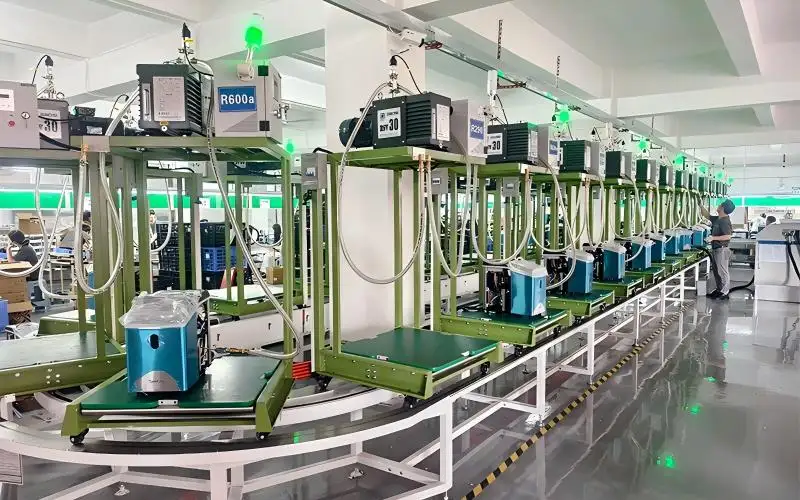
Un aperçu étape par étape de la gestion des réfrigérants, Vérification du refroidissement, Détection des fuites, Action corrective et tests de sécurité électrique pour une machine à glaçons, La fiabilité des performances est déterminée bien avant que le carton ne soit scellé. ...
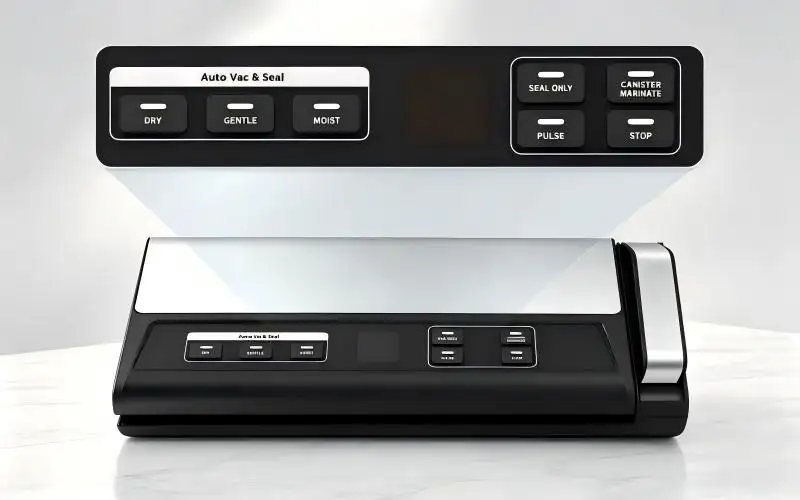
Guide pour les marques à la recherche d’un fournisseur OEM fiable de scelleuses sous vide
2026-09-14
PAR YUMYTH
Lorsque vous achetez des appareils de cuisine pour votre marque de détail, Trouver un fournisseur fiable de scelleuses sous vide ne se limite que rarement à obtenir le prix unitaire le plus bas. Il s’agit de protéger....

Pourquoi la forme de la glace est importante: Comprendre la glace de pépite cylindrique de 10 mm × 15 mm
2026-09-14
PAR YUMYTH
Plus que la production de glace — la glace elle-même façonne l’expérience du consommateur lors de l’achat d’une machine à glaçons à pépites, Les acheteurs se concentrent souvent d’abord sur la capacité de production, Taille du réservoir d’eau, panier à glace....
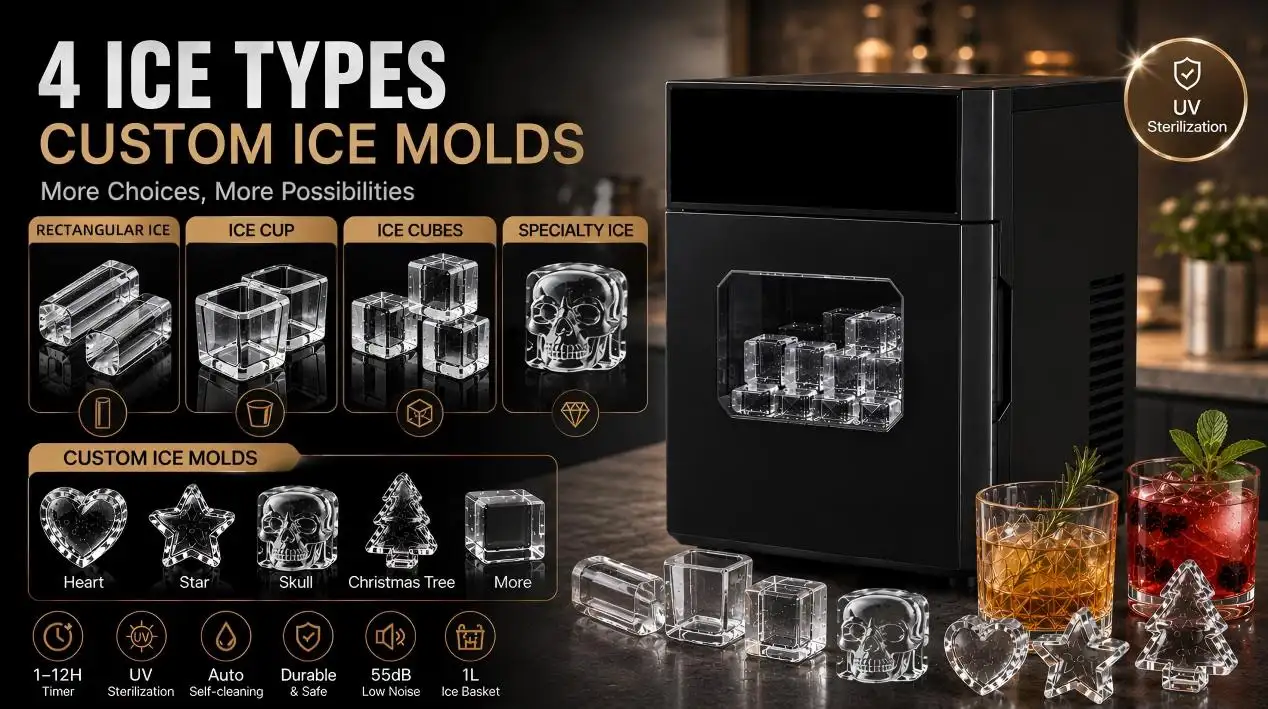
Guide d’approvisionnement en machine à glace: Comment trouver la bonne usine
2026-09-10
PAR YUMYTH
Trouver une machine à glace semble simple sur le papier. Trouvez un fournisseur, D’accord sur un prix, Passer une commande. Mais quiconque a réellement fait cela sait que le processus est rarement....